



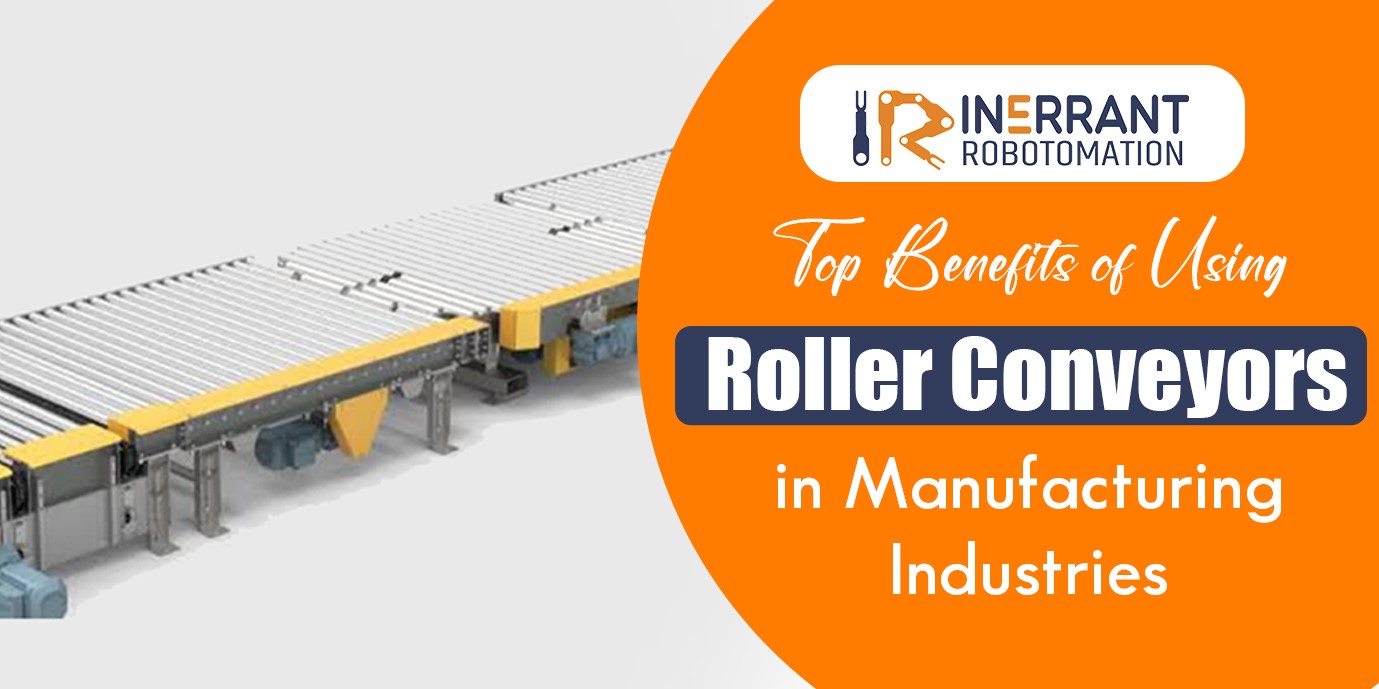
In modern manufacturing industries, efficient material handling is essential for maintaining productivity, reducing operational costs, and ensuring smooth production flow. A roller conveyor is one of the most widely used material-handling systems for transporting boxes, pallets, components, containers, and other industrial products from one workstation to another.
Roller conveyors are available in different configurations, including gravity roller conveyors, powered roller conveyors, chain-driven roller conveyors, and heavy-duty roller conveyors. Their flexibility makes them suitable for automotive, engineering, warehousing, packaging, logistics, food processing, and other manufacturing applications.
A roller conveyor is a material-handling system consisting of a series of rollers mounted within a frame. Products move over these rollers either through gravity, manual pushing, or a powered drive system.
Depending on the application, manufacturers can select different roller diameters, widths, materials, load capacities, and drive mechanisms.
Simple definition: A roller conveyor is an industrial conveyor system designed to move products and materials efficiently from one location to another using rotating rollers.
One of the biggest advantages of roller conveyors is their ability to move materials continuously between different stages of production.
Instead of manually transporting heavy components, operators can use conveyors to move products between:
This creates a smoother material flow and helps manufacturers improve overall operational efficiency.
Manual transportation of heavy or repetitive loads can consume significant time and labor.
A roller conveyor system reduces the need for employees to repeatedly lift, carry, push, or transport materials over long distances. This allows workers to focus on assembly, inspection, quality control, and other value-added activities.
For heavy industrial applications, powered or heavy-duty roller conveyors can handle substantial loads with less manual intervention.
Manufacturing productivity depends heavily on the movement of materials between workstations.
A properly designed roller conveyor maintains a consistent material flow, helping reduce unnecessary waiting and transportation time.
For example:
Raw Material → Processing → Assembly → Inspection → Packaging → Dispatch
A roller conveyor can connect these stages and create a more organized production workflow.
Heavy-duty roller conveyors are particularly useful in industries where large and heavy components need to be transported.
They can be designed for applications involving:
The conveyor's roller diameter, frame construction, bearing arrangement, and drive system should be selected according to the required load capacity.
Every manufacturing facility has different space and material-handling requirements. Roller conveyors can therefore be customized according to the application.
Common customization options include:
This flexibility makes roller conveyors suitable for both small production areas and large industrial facilities.
Modern manufacturing increasingly uses automation to improve productivity and reduce human intervention.
Powered roller conveyors can be integrated with automated systems such as:
This makes roller conveyors an important component of Industry 4.0 and automated material-handling systems.
Although the initial investment depends on conveyor type and customization, roller conveyors can help reduce long-term material-handling costs.
They can reduce:
A well-designed conveyor system can therefore contribute to better operational efficiency and return on investment.
A conveyor system creates a defined path for material movement. This can help manufacturers organize production floors more effectively.
Instead of materials being transported randomly between workstations, conveyors provide a structured material flow.
This can contribute to:
Roller conveyors can be installed between different machines and production stations.
For example, an automotive manufacturing facility may use roller conveyors to transport components from machining to assembly and then toward inspection or packaging.
Because conveyor sections can be configured in different layouts, manufacturers can design systems according to their production requirements.
Properly designed roller conveyors can provide controlled movement of products and reduce unnecessary manual handling.
For suitable products, this can help minimize the risk of accidental drops, impacts, and handling-related damage.
The correct roller type, speed, spacing, and conveyor configuration are important for achieving safe and controlled product movement.
Roller conveyors are used across many manufacturing and industrial sectors, including:
| Feature | Roller Conveyor | Manual Handling |
|---|---|---|
| Material movement | Continuous or controlled | Manual |
| Labor requirement | Lower | Higher |
| Heavy-load handling | Suitable with proper design | More difficult |
| Production flow | More consistent | Can vary |
| Automation | Easy to integrate | Limited |
| Productivity | High | Depends on manpower |
| Long-distance movement | Efficient | Time-consuming |
Before purchasing an industrial roller conveyor, manufacturers should evaluate several factors:
A roller conveyor can provide an effective solution when a manufacturing facility needs reliable movement of products, components, pallets, or other materials.
The main benefits include:
However, the right conveyor should always be selected based on product characteristics, load requirements, speed, layout, operating environment, and production objectives.
Roller conveyors are an efficient material-handling solution for modern manufacturing industries. They help move products and components between production, assembly, inspection, packaging, storage, and dispatch areas while reducing unnecessary manual handling.
From heavy-duty industrial roller conveyors to automated powered systems, manufacturers can select and customize conveyor solutions according to their specific operational requirements.
If you are planning to install a roller conveyor for your manufacturing facility, evaluate the required load capacity, conveyor dimensions, roller specifications, speed, drive mechanism, and automation requirements before selecting the system.
A roller conveyor is used to transport products, boxes, pallets, components, and other materials between different areas of a manufacturing or material-handling facility.
The main benefits include improved material flow, reduced manual handling, increased productivity, heavy-load handling, customization, and automation compatibility.
Common types include gravity roller conveyors, powered roller conveyors, chain-driven roller conveyors, and heavy-duty roller conveyors.
Yes. Heavy-duty roller conveyors can be designed to transport heavy components, pallets, machinery parts, and fabricated products when the rollers, frame, bearings, and drive system are properly selected.
Yes. Powered roller conveyors can be integrated with sensors, PLCs, robotic systems, sorting equipment, and other automated material-handling technologies.
Consider load capacity, product dimensions, roller diameter and spacing, conveyor length and width, speed, drive system, operating environment, and automation requirements.
Roller conveyors are widely used in automotive, engineering, machinery manufacturing, warehousing, logistics, packaging, metalworking, and other industrial applications.
Yes. They can reduce repetitive lifting, pushing, carrying, and transportation tasks, allowing employees to focus on other production activities.