



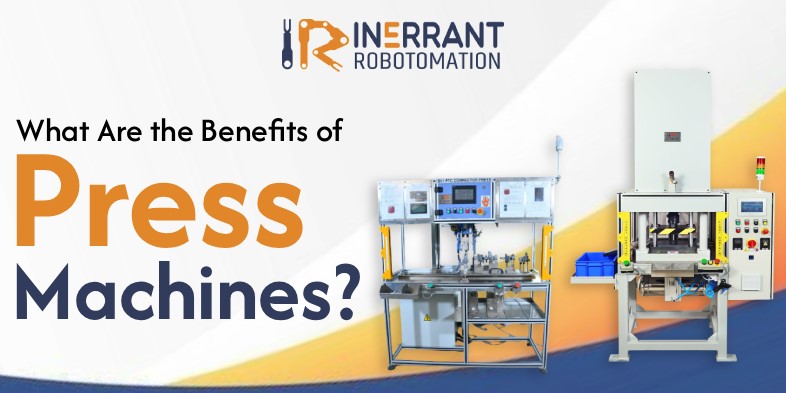
Press Machines are one of the most important pieces of equipment in modern manufacturing. They apply controlled force to shape, assemble, punch, press-fit, bend, stamp, or form materials with high precision and repeatability. Whether producing automotive components, electrical assemblies, medical devices, or metal parts, manufacturers rely on press machines to improve efficiency, maintain quality, and increase production capacity.
Today's hydraulic, pneumatic, and servo press machines are designed to support automated production environments while delivering consistent force, accurate positioning, and reliable performance. Their ability to perform repetitive operations with minimal variation makes them essential for industries focused on productivity and quality.
This guide explains the major benefits of press machines, their applications, and why they have become indispensable in modern industrial manufacturing.
A Press Machine is an industrial machine that applies compressive force to perform manufacturing operations such as forming, stamping, punching, bending, riveting, clinching, assembly, and press fitting.
Depending on production requirements, manufacturers can choose from hydraulic, pneumatic, mechanical, or servo-driven press machines, each offering specific advantages in terms of speed, force, accuracy, and energy efficiency.
Press machines offer significant operational and economic advantages across manufacturing industries.
Press machines perform repetitive operations quickly and accurately, reducing cycle times and increasing production output.
Benefits include:
Modern press machines deliver controlled force and repeatable positioning, ensuring every component is produced within specified tolerances.
This is particularly important for:
Consistent pressing force minimizes dimensional variations and defects.
Manufacturers benefit from:
Proper design ensures smooth and safe material movement.
Modern press machines incorporate advanced safety features, including:
These features help protect operators while maintaining productivity.
Automation reduces labor requirements and material waste while improving production consistency.
Cost-saving advantages include:
Hydraulic and servo press machines generate substantial force, making them suitable for heavy-duty manufacturing applications.
They are commonly used for:
One press machine can perform multiple manufacturing operations depending on tooling.
Typical operations include:
Modern press machines integrate easily with:
This enables smart manufacturing and real-time production monitoring.
High-quality press machines are designed for continuous industrial operation using durable components and robust construction.
Routine maintenance further increases equipment lifespan and reduces unexpected downtime.
Although industrial press machines represent a capital investment, their long service life, improved productivity, reduced defects, and lower operating costs provide an excellent return on investment.
Press machines are widely used in:
Manufacturers commonly use:
Consider the following factors before investing:
Selecting the correct press machine improves productivity and reduces long-term operating costs.
To ensure reliable performance:
Proper maintenance minimizes downtime and extends equipment life.
Industrial manufacturers choose modern press machines because they provide:
These advantages make press machines a key investment for competitive manufacturing operations.
Press Machines are essential for modern manufacturing because they improve productivity, precision, quality, and workplace safety while reducing production costs. Whether using hydraulic, pneumatic, mechanical, or servo technology, these machines enable manufacturers to produce high-quality components efficiently and consistently.
Investing in the right press machine helps businesses increase output, reduce waste, improve product quality, and remain competitive in today's industrial marketplace. Partnering with an experienced press machine manufacturer also ensures reliable equipment, technical support, and long-term operational success.
Looking for a reliable Press Machine for your manufacturing process? Our engineering team offers hydraulic, pneumatic, mechanical, and servo press solutions tailored to your production requirements. Contact us today for expert guidance, customized solutions, and high-performance industrial press machines that improve productivity and product quality.
A Press Machine is an industrial machine that applies controlled force to shape, stamp, bend, punch, assemble, or form materials. It is widely used in manufacturing to improve productivity, precision, and product quality.
Press Machines offer numerous benefits, including higher production efficiency, improved accuracy, and consistent product quality, reduced labor costs, enhanced workplace safety, lower material waste, and increased manufacturing productivity.
Press Machines are commonly used in automotive manufacturing, aerospace, electronics, medical devices, metal fabrication, railway, renewable energy, consumer goods, packaging, and industrial machinery industries.
The main types of Press Machines include Hydraulic Press Machines, Pneumatic Press Machines, Mechanical Press Machines, Servo Press Machines, C-Frame Presses, H-Frame Presses, and Custom Industrial Press Machines.
Choose a Press Machine based on your required pressing force, material type, production volume, accuracy requirements, automation needs, available workspace, and maintenance considerations.
Press Machines can process steel, stainless steel, aluminum, brass, copper, plastic components, rubber, composite materials, and various engineered materials depending on the application.
Regular preventive maintenance should be carried out according to the manufacturer's recommendations. This typically includes lubrication, inspection of hydraulic or pneumatic systems, tooling alignment checks, and safety device verification to ensure reliable performance.
Modern Press Machines improve production speed, precision, automation, energy efficiency, workplace safety, and overall manufacturing quality while reducing downtime and operating costs.