



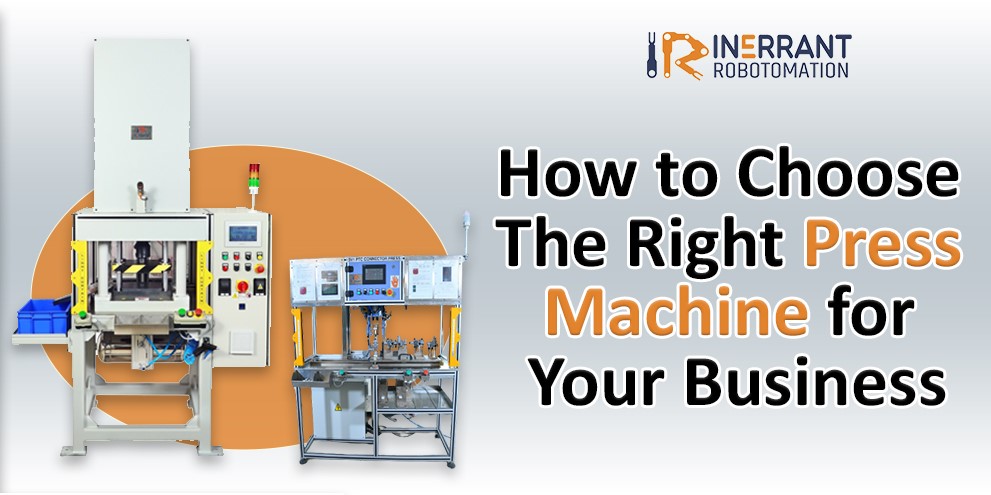
Selecting the right press machine is a critical decision for any manufacturing business. Whether you are in metal fabrication, automotive, or industrial production, the right press machine can significantly impact productivity, quality, and operational costs. With various types and specifications available, choosing the ideal press machine requires careful evaluation of your business needs.
A press machine is an industrial device used to shape, cut, or form materials like metal by applying pressure. It plays a vital role in industries such as automotive, aerospace, electrical components, and heavy engineering.
Understanding the type of press machine is the first step:
Choose based on your production requirement and material type.
Define what you need the machine for:
Different applications require different press capacities and configurations.
Tonnage refers to the force the machine can apply.
Always select slightly higher tonnage than your requirement for safety and flexibility.
Tonnage refers to the force the machine can apply.
Always select slightly higher tonnage than your requirement for safety and flexibility.
Food processing involves multiple stages like sorting, washing, processing, packaging, and distribution. Belt conveyors help streamline these operations by:
If your business focuses on mass production, speed and automation become crucial factors.
For industries like automotive and electronics, precision is essential. Hydraulic presses generally provide better control and accuracy compared to mechanical presses.
Modern press machines come with:
Investing in automated press machines increases efficiency and reduces labor costs.
Consider your factory space before purchasing:
Choose a machine that offers:
Reliable machines reduce downtime and increase productivity.
Evaluate the total cost:
Don’t just go for the cheapest option—focus on long-term ROI.
Always select a trusted manufacturer who provides:
A good supplier ensures smooth operation and technical support when needed.
Choosing the right press machine for your business is not just about cost—it’s about performance, efficiency, and long-term growth. By understanding your requirements and evaluating key factors like type, capacity, automation, and budget, you can make an informed decision that boosts your productivity and profitability.
Hydraulic press machines are ideal due to flexibility and lower initial cost.
Hydraulic presses offer more control and precision, while mechanical presses are faster and suitable for mass production.
Tonnage depends on material type, thickness, and application—consult with experts for accurate calculation.
Yes, they improve efficiency, reduce labor costs, and increase production speed.