



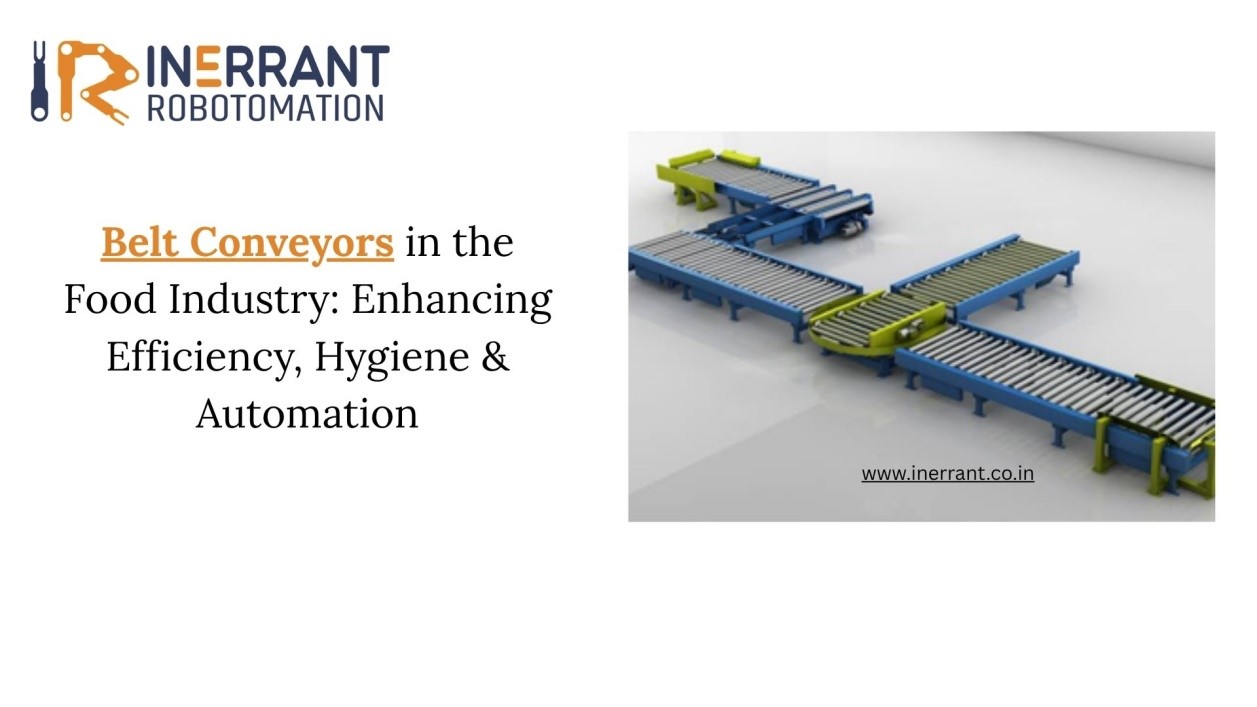
The food industry requires speed, hygiene, and precision in handling products. From raw material movement to packaging and distribution, efficient material handling systems are essential. One of the most widely used solutions is the belt conveyor.
Belt conveyors play a critical role in ensuring smooth, safe, and hygienic transportation of food products across different stages of processing. In this blog, we’ll explore how belt conveyors are used in the food industry, their benefits, types, and applications.
A belt conveyor is a mechanical system that uses a continuous belt to transport materials or products from one point to another.
In the food industry, conveyors are designed with food-grade materials to maintain hygiene and safety standards.
Food processing involves multiple stages like sorting, washing, processing, packaging, and distribution. Belt conveyors help streamline these operations by:
They are essential for modern automated food processing plants.
Used to transport fruits, vegetables, grains, and other raw materials.
Moves products through washing, cutting, cooking, and cooling stages.
Ensures smooth movement of packaged food items for sealing and labeling.
Used for transporting bottles, cans, and cartons.
Special conveyors operate efficiently in low-temperature environments.
These features ensure compliance with food safety regulations.
Dry, wet, frozen, or packaged products.
Select materials that meet food safety standards.
Ensure it can handle required volume.
Adjustable speed for different processes.
Consider temperature, moisture, and cleaning frequency.
Integration with sensors and IoT for monitoring.
Reduced operational costs.
Quick-clean and tool-less maintenance systems.
Tailored designs for specific food applications.
A trusted manufacturer ensures:
Belt conveyors are an essential part of the food industry, ensuring efficient, hygienic, and safe product handling. Their ability to support automation and improve productivity makes them a key investment for modern food processing plants.
Choosing the right conveyor system can significantly enhance operational efficiency, product quality, and overall profitability.
They ensure hygienic, efficient, and safe transportation of food products.
Modular and stainless steel conveyors are widely used.
Yes, when made with food-grade materials.
Food processing, beverage, packaging, and cold storage industries.