



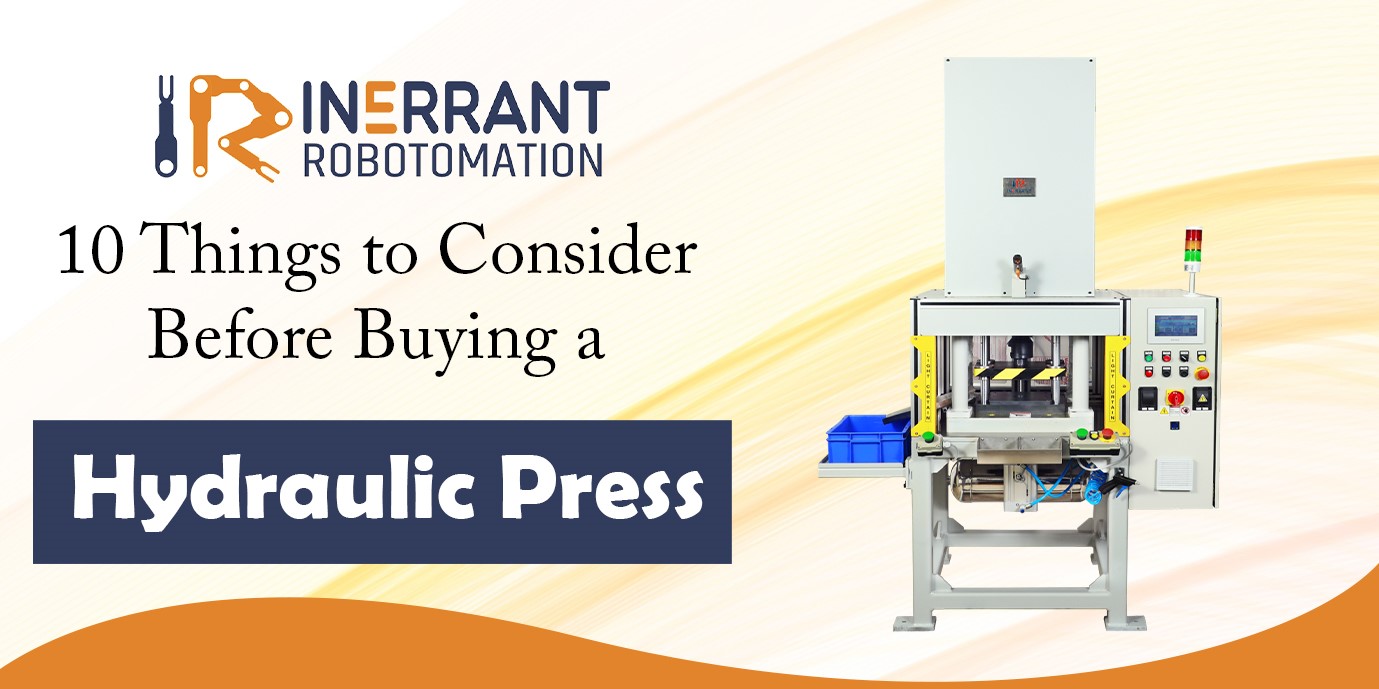
Buying a hydraulic press is a significant investment for any manufacturing, automotive, fabrication, or engineering business. Selecting the right machine improves productivity, ensures operator safety, and reduces long-term maintenance costs. However, choosing the wrong hydraulic press can lead to production delays, increased operating expenses, and inefficient performance.
This hydraulic press buying guide explains the 10 most important factors you should evaluate before making your purchase.
The first step is understanding exactly how the hydraulic press will be used.
Different applications require different press configurations, including:
Choosing a press designed specifically for your application improves efficiency and product quality.
One of the most critical factors is selecting the correct tonnage.
Hydraulic presses are available in capacities such as:
A machine with insufficient force may fail to complete operations, while an oversized press increases energy consumption and purchase cost.
Always calculate:
before selecting the press capacity.
Hydraulic presses come in several frame configurations.
Common options include:
H-Frame Press
Ideal for:
C-Frame Press
Best for:
Four-Column Press
Suitable for:
Custom Hydraulic Press
Designed for specialized industrial applications requiring unique specifications.
Selecting the proper frame improves accuracy and durability.
Before purchasing, verify that the machine can accommodate your largest components.
Important dimensions include:
Insufficient workspace limits future production capabilities.
The hydraulic system is the heart of the machine.
Look for:
A well-designed hydraulic system increases machine life while reducing maintenance costs.
Modern hydraulic presses offer advanced automation for improved productivity.
Popular automation options include:
Automation reduces operator errors and increases production consistency.
Safety should never be compromised.
Essential safety features include:
Machines complying with international safety standards provide better workplace protection.
Hydraulic presses consume significant power during operation.
Energy-efficient systems offer:
Lower energy usage translates into reduced operating costs over the machine's lifetime.
Before purchasing, ask the manufacturer about:
Reliable after-sales service minimizes downtime and protects your investment.
A reputable manufacturer provides more than just machinery.
Consider companies that offer:
Choosing an experienced hydraulic press manufacturer ensures long-term reliability and better return on investment.
Before finalizing your purchase, ask these questions:
These questions help you avoid costly purchasing mistakes.
Selecting the correct hydraulic press offers several advantages:
A properly selected hydraulic press becomes a long-term asset for your manufacturing facility.
Buying a hydraulic press is more than comparing prices. You should evaluate application requirements, tonnage, frame design, automation, safety, energy efficiency, maintenance support, and the manufacturer's reputation before making a decision.
Taking the time to assess these factors ensures you invest in a hydraulic press that delivers reliable performance, improves productivity, and supports your business growth for years to come.
If you're looking for a high-quality hydraulic press tailored to your industrial requirements, consult an experienced manufacturer who can recommend the right solution based on your production needs.
The required tonnage and application are the two most important factors. Selecting the correct capacity ensures efficient and safe operation.
The required tonnage depends on the material type, thickness, workpiece size, and the specific manufacturing process.
H-frame presses are commonly used for heavy-duty operations, while C-frame presses are suitable for lighter manufacturing tasks. Four-column presses are ideal for large workpieces and deep drawing.
Yes. Automation improves productivity, consistency, operator safety, and reduces human error, making it a valuable investment for high-volume production.
Reliable maintenance support, spare parts availability, and technical assistance help reduce downtime and extend the machine's lifespan.